Home laser skin tightening can make skincare feel convenient, but convenience does not remove medical risk. A warm device in your hand may seem harmless. It is not a substitute for professional assessment.
Many users ask, “what are the side effects of home laser skin tightening?” Possible reactions include redness, swelling, dryness, tenderness, temporary darkening, and uneven results. Incorrect settings may increase irritation or cause burns, especially on sensitive or recently treated skin. Results also vary with age, skin tone, device quality, and treatment consistency.
Prevention begins before the first pulse. Read the complete manufacturer instructions, check the treatment area, and perform a small patch test. Clean, dry skin is safer than skin covered with oils, makeup, or active products. Avoid using the device over wounds, rashes, infections, tattoos, or areas with unusual pigmentation. Protective eyewear matters when the device requires it.
Start conservatively. Use the lowest effective setting and avoid repeating pulses over one spot. Keep a simple treatment record, including the date, intensity, and skin response. Stop when discomfort becomes sharp, persistent, or unusual. Mild redness may settle, but blistering, severe pain, spreading swelling, or lasting color changes require medical advice.
A qualified dermatologist can review your skin history and medications before treatment. This is especially important if you have a history of abnormal scarring or light sensitivity. No routine is foolproof. Even careful users can misread their skin’s warning signs. When uncertainty remains, delaying treatment is often the safer choice.
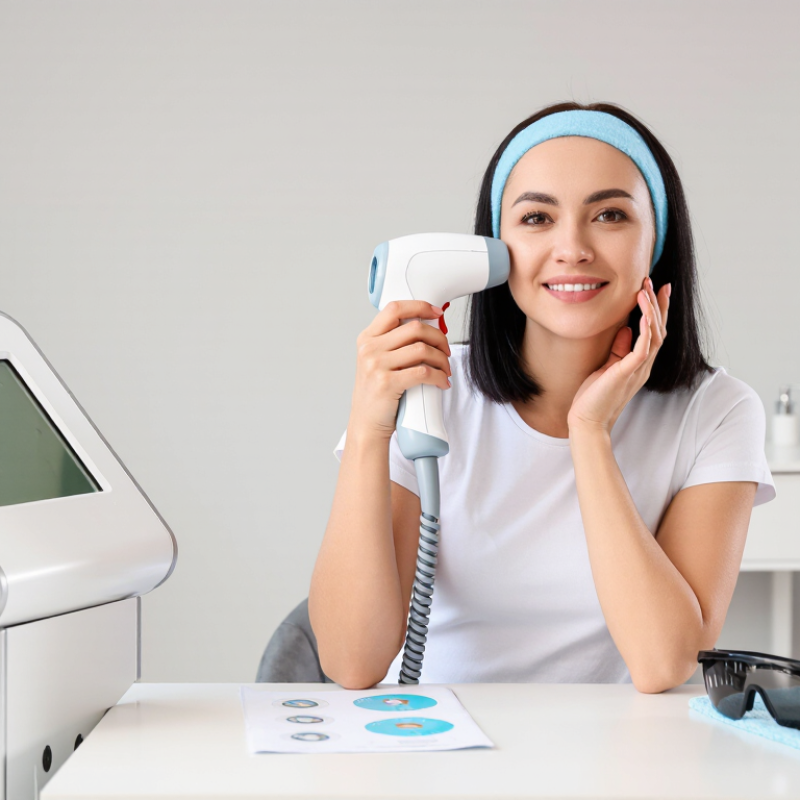
Before choosing light-based settings, identify the patient’s Fitzpatrick skin type, from I to VI. This scale estimates how skin reacts to ultraviolet exposure, not a person’s ethnicity. Type I usually burns and never tans. Type VI rarely burns but can still develop heat-related pigmentation changes. Ask about recent tanning, previous burns, melasma, keloids, and photosensitive medicines. Inspect the jawline and neck in neutral daylight. Small details matter.
The Fitzpatrick classification was introduced by Thomas Fitzpatrick in 1975 and remains widely used in laser practice. However, it is imperfect. A patient may sit between categories. Document both the assigned type and the patient’s real tanning history. Use lower starting energy for darker or recently tanned skin, with adequate cooling and conservative pulse selection. Perform a discreet test spot when uncertainty exists. Wait for delayed redness or darkening before treating a larger area.
The FDA’s MAUDE reporting system shows why caution matters: its adverse-event reports are voluntary and cannot establish true complication rates. Reported reactions may include burns, swelling, blistering, and pigment alteration. Professional laser safety guidance consistently supports trained supervision, eye protection, cooling, and clear aftercare instructions. Do not promise “zero risk.”
I would rather pause than guess. A slightly uneven test result is useful information, not failure. Reassess the settings, skin response, and treatment goal before continuing.
Before using a home laser skin-tightening device, verify its FDA 510(k) clearance in the official database. Clearance means the device is substantially equivalent to an existing device. It does not guarantee perfect results or eliminate every risk. Match the listed model number, intended use, treatment area, and operating instructions. A logo or “FDA cleared” claim alone is not enough. Labels can mislead.
Wavelength safety deserves equal attention. Check the exact wavelength, energy level, pulse duration, and recommended treatment interval. Different wavelengths reach different skin depths and may produce different heat levels. Use the supplied eye protection, even when the light appears gentle. Never treat over irritated skin, open wounds, suspicious moles, or recently sunburned areas. Darker skin tones may face a higher risk of burns or pigment changes with certain settings, so professional advice matters.
Patch-test a small area and inspect it after 24 to 48 hours. Stop if you notice blistering, intense pain, swelling, or lasting color changes. Do not guess. A cautious user should also review the contraindications, cleaning instructions, and return policy before purchase. In practice, people often focus on wavelength numbers while ignoring heat buildup from repeated passes. That is an easy mistake, and I would not dismiss it. A qualified dermatologist can help interpret unclear specifications, especially when the device’s clearance does not cover your intended use.
Verify FDA 510(k) clearance for the exact device model and confirm that its wavelength and intended use match the treatment area and your skin type.
The chart shows representative wavelength bands used in consumer light-based devices. Wavelength alone does not establish safety or FDA clearance. Before use, check the exact model in the FDA 510(k) database, follow the device labeling, use eye protection when required, and perform a patch test according to the instructions.
Before using a home laser skin-tightening device, patch-test one small area. Choose the jawline or behind the ear. Avoid broken skin, active rashes, and areas near the eyes. Use the lowest recommended setting. Then monitor the site for 24–48 hours. Mild warmth may occur. Persistent redness, swelling, burning, blisters, or darkening needs attention. Stop treatment if these symptoms appear.
The American Academy of Dermatology warns that home light-based devices can still cause burns, pigment changes, and eye injuries when used incorrectly. A peer-reviewed review in Dermatologic Surgery also reported that home-use dermatology devices generally caused temporary reactions, but more serious injuries were documented. A patch test reduces uncertainty. It does not guarantee safety. Skin may react differently after repeated sessions, especially with recent sun exposure or irritating skincare products.
Tips: Clean and dry the test area first. Take a photo before treatment. Check it again at 24 and 48 hours. Do not apply acids, retinoids, or fragrance there during monitoring. Darker skin tones may face a higher risk of post-inflammatory pigmentation, so professional advice matters. Read the instructions carefully, though some guidance remains surprisingly vague. If pain increases instead of fading, contact a qualified healthcare professional promptly.
How to Prevent Side Effects of Home Laser Skin Tightening?
Following the manufacturer’s schedule is one of the simplest safety steps. Many home devices recommend one or two sessions weekly. Do not add extra treatments because results seem slow. Skin needs recovery time between sessions. More energy is not always better.
Read the manual before each use. Check the recommended duration, intensity, and treatment areas. Begin with the lowest suitable setting, especially during your first session. A small test area can reveal unusual redness or irritation. Clean, dry skin helps the device glide evenly. Avoid broken skin, active rashes, and recently sunburned areas.
Watch your skin for several hours afterward. Mild warmth or temporary redness may occur. Pain, swelling, blistering, or lasting discoloration requires immediate treatment pauses. Contact a qualified healthcare professional if symptoms continue or worsen. Avoid using strong exfoliants, retinoids, or irritating products around treatment days unless a clinician approves them. Eye protection matters, too.
The schedule can feel frustrating. I understand the temptation to treat more often. However, personal skin sensitivity, age, medication use, and device settings can change recovery time. Manufacturer instructions are a starting point, not permission to ignore your skin’s response. A cautious routine may produce slower progress, but it reduces avoidable irritation.
| Safety Dimension | Practical Guidance | Typical Schedule or Limit | Why It Matters |
|---|---|---|---|
| Treatment frequency | Follow the exact schedule supplied with the device. Do not add extra sessions because the skin appears to be tolerating treatment. | Many home light-based devices use once-weekly or once-every-two-weeks routines; schedules vary by technology and model. | Overuse can increase redness, tenderness, dryness, burns, or temporary changes in skin color. |
| Treatment interval | Allow the recommended recovery period between treatments, even when results are not immediately visible. | Commonly 7–14 days for some home light-based routines; use the device manual as the controlling reference. | Skin reactions may develop or persist after treatment and require time to settle. |
| Patch testing | Test a small area before the first full treatment and after a significant change in skin sensitivity, medication, or tanning status. | Observe the area for the period specified in the instructions, often 24–48 hours. | A patch test may reveal excessive irritation before a larger area is exposed. |
| Skin preparation | Use clean, dry skin and remove products that the instructions identify as unsuitable. Avoid applying irritating cosmetics immediately beforehand. | Prepare before every session. | Residue, fragrance, or active ingredients may increase irritation or interfere with treatment. |
| Sun and tanning exposure | Avoid treatment on recently tanned or sunburned skin. Protect treated areas from sunlight and use broad-spectrum sunscreen as appropriate. | Delay treatment until the skin has returned to its normal condition and the manual permits use. | Recent UV exposure can raise the risk of burns and temporary or persistent pigment changes. |
| Energy setting | Begin at the lowest recommended setting and increase only according to the instructions. Stop if the sensation becomes painful or unusually hot. | Never exceed the device’s maximum setting or compensate for missed sessions by increasing intensity. | Higher intensity does not automatically produce faster results and may increase adverse reactions. |
| Normal short-term response | Mild, temporary warmth or redness may occur, depending on the technology and individual sensitivity. | Symptoms should improve rather than progressively worsen. | Monitoring the trend helps distinguish an expected response from a possible injury. |
| Stop-treatment signs | Stop using the device and seek medical advice for blistering, severe pain, marked swelling, crusting, spreading redness, or significant color change. | Do not resume until a qualified healthcare professional advises that it is safe. | These symptoms may indicate a burn, significant inflammation, infection, or pigment injury. |
| Medication and health review | Ask a healthcare professional before use if taking medicines that increase light sensitivity or if you have an active skin condition, impaired healing, or a history of abnormal scarring. | Review suitability before the first session and whenever health circumstances change. | Some conditions and medicines can increase sensitivity or affect healing. |
| Record keeping | Record the date, body area, setting, and skin response after each session. | Review the record before the next treatment. | A treatment log helps prevent accidental over-treatment and identifies patterns of irritation. |
Important: “Commonly 1–2 weekly” is a general example, not a universal rule. Home laser, light-based, and radiofrequency devices have different treatment schedules. Always prioritize the instructions for the specific device and consult a qualified healthcare professional when suitability or a skin reaction is uncertain.
Home laser and heat-based devices can leave temporary warmth or mild redness. That reaction should steadily fade. Do not continue treatment when redness remains strong after 48 hours.
Stop immediately if you notice: blisters, broken skin, swelling, numbness, or pain beyond 48 hours. The U.S. FDA warns that excessive energy or poor contact can cause burns and other tissue injury. Its MAUDE safety database also records adverse-event reports involving aesthetic energy devices, although these reports cannot measure true risk.
A 2023 ISAPS global survey recorded more than 19 million nonsurgical aesthetic procedures worldwide.
That figure shows demand, not proof that home treatment is risk-free. A common mistake is treating redness as evidence that the device is working. It may indicate excessive heat instead.
Cool the area with a clean, damp compress. Avoid ice, exfoliating acids, retinoids, fragrance, and additional treatments. Do not puncture blisters.
Photograph the skin and record the device setting, duration, and reaction. Contact a qualified dermatologist promptly, especially when pain increases or the skin feels unusually hot.
The American Academy of Dermatology recommends professional assessment for suspected burns or persistent treatment reactions. Patch testing helps, but it cannot predict every response. Even careful users can misjudge delayed injury.
Search the official FDA database using the exact model number. Match the intended use, treatment area, and operating instructions. A logo or clearance claim alone is not enough. Labels can mislead. Clearance does not guarantee perfect results or remove every risk.
Confirm the exact wavelength, energy level, pulse duration, and treatment interval. Different wavelengths reach different skin depths. They may also create different heat levels. Do not focus on wavelength numbers alone. Repeated passes can quietly increase heat buildup.
Choose a small area near the jawline or behind the ear. Avoid the eyes, broken skin, rashes, and irritated areas. Clean and dry the skin first. Use the lowest recommended setting. Take a photo before treatment.
Check the area after 24 and 48 hours. Mild warmth may occur briefly. Persistent redness, swelling, burning, blistering, or darkening requires caution. Stop treatment if these symptoms appear. A patch test reduces uncertainty, but it cannot guarantee safety.
Do not treat open wounds, active rashes, irritated skin, suspicious moles, or recent sunburn. Avoid areas close to the eyes. Recent sun exposure may increase sensitivity. This matters more than many people expect.
Certain settings may increase burn or pigment-change risks for darker skin tones. Post-inflammatory pigmentation can appear after irritation. Professional advice may help identify safer settings. Guessing is a poor plan.
Use the supplied eye protection, even when the light looks gentle. Read the contraindications and cleaning instructions carefully. Avoid acids, retinoids, and fragrance on the test area while monitoring. Some instructions remain surprisingly vague. That deserves careful judgment.
Seek qualified medical advice for increasing pain, blisters, severe swelling, or lasting color changes. Ask for help when clearance does not cover your intended use. A dermatologist can interpret unclear specifications. I would not dismiss persistent symptoms.
Before using a home laser skin-tightening device, identify your Fitzpatrick skin type, from I to VI, because different skin tones may respond differently to light-based energy. Choose settings only within the device’s approved guidance, and verify that the device has appropriate FDA 510(k) clearance and uses a wavelength intended for safe home use. To reduce the risk of irritation, patch-test a small, discreet area first and observe it for 24–48 hours before treating a larger region.
A common mistake is using the device too frequently. Follow the manufacturer’s schedule, which is often limited to one or two sessions per week, and avoid increasing intensity or treatment time without clear instructions. If you experience redness that persists, blistering, significant swelling, or pain lasting beyond 48 hours, stop treatment and seek professional medical advice. Understanding what are the side effects of home laser skin tightening can help users recognize warning signs early and approach treatment more safely.

Kelli Beauty